01
Technical drawing and bending analysis
We review your drawings and assess reference surfaces, bend directions, and possible angle risks.

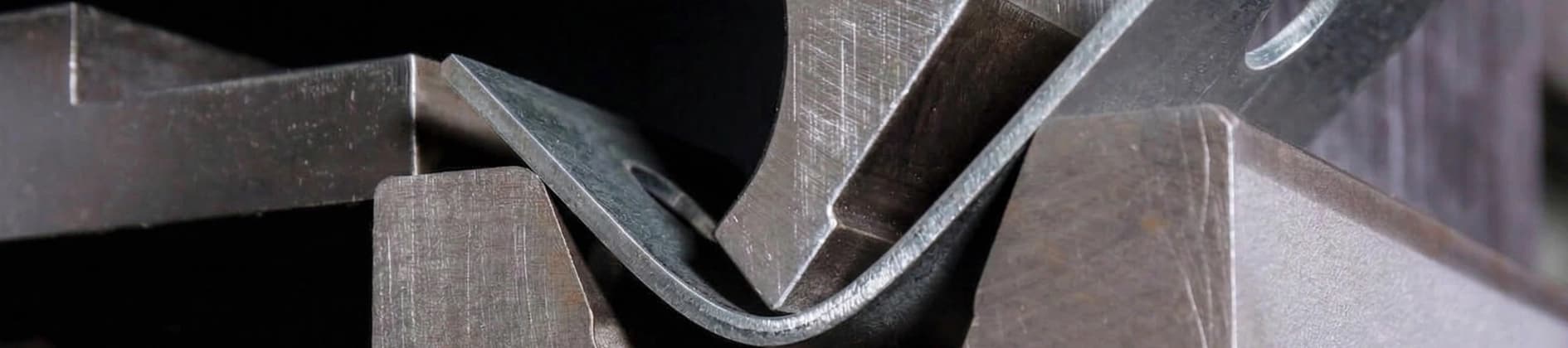
The biggest risk in press brake bending is springback and angle deviation. With our advanced machines and experienced team, we assess these risks before the operation starts.
We apply the challenging angles in your technical drawing with millimetric precision and deliver parts that align with each other in assembly.
In the first review, we do not assess only the operation itself. We evaluate tolerance risk, assembly fit, and delivery discipline together so uncertainty is reduced before production starts.
See the service's key limits and application frame directly, without unnecessary detail.
Jobs where the parts must align with each other and should not require correction later.
Production runs where every batch is expected to keep the same geometry as the first one.
Projects where bending is followed by welding, assembly, or grouped joining operations.
Cabinets, housings, carriers, and technical parts that demand reliable form accuracy.
The goal here is not only to carry out the operation, but to move forward with the right method so the part does not create issues in the next production stage.
We review your drawings and assess reference surfaces, bend directions, and possible angle risks.
We select the most suitable tooling, define the operation order, and plan springback compensation.
Your parts are formed on our CNC press brakes with close attention to angle and dimensional consistency.
Produced parts are checked against the technical drawing, verified for assembly fit, and prepared for dispatch.
What matters on the customer side is not flashy production, but the right part that fits assembly, can be repeated, and does not create schedule pressure.
Compatible parts that accelerate your assembly line
Prevention of faulty production and material loss
Repeatable quality in serial production
On-time delivery that keeps your project moving
An optimized bending plan that lowers cost
Technical guidance from design to production
Less corrective work during welding and assembly
Lower schedule pressure through getting the part right the first time
The sector name alone is not enough. What matters is the character of the job: tolerance, assembly fit, serial repeatability, and downstream operation requirements.
Use Case 01
A good fit for jobs that require tight tolerances, repeatable part standards, and delivery ready for assembly.
Use Case 02
A good fit for jobs that require tight tolerances, repeatable part standards, and delivery ready for assembly.
Use Case 03
A good fit for jobs that require tight tolerances, repeatable part standards, and delivery ready for assembly.
Use Case 04
A good fit for jobs that require tight tolerances, repeatable part standards, and delivery ready for assembly.
To receive the first feedback faster, it is enough to share the technical data completely. That lets us clarify the material, operation sequence, and lead time.
01
Technical drawing, DXF, or DWG file
02
Material type, thickness, and total quantity
03
Lead time, surface expectation, and assembly notes
We can bend mild steel, stainless steel, and aluminum from 0.5 mm up to 20 mm thickness, depending on the part geometry.